Monday, February 10, 2014

5 Questions to Grow A Marriage

Marriage is not for the faint of heart. Marriage takes strength, skill, stamina and supernatural action to grow it into the kind of relationship we all want and that God intended it to be.

To make a better marriage takes two commitments to stick with it - better or worse - richer or poorer - sick or well. I'm so thankful marriage vows are not multiple choice or my wife would have gotten rid of me years ago.

After nearly 28 years, I've found these 5 questions are helpful to growing a marriage.

1. How can I serve today?
When my view for the day is to be a servant then my marriage will be stronger. The goal of this relationship is to out-serve one another. It's in those little things - replacing the empty toilet paper roll, putting the lid down, putting my dishes away and dirty laundry in the hamper. If it's a clean kitchen sink or a bed that gets made each day that helps her feel better about life, then that's the way I can best serve.

2. How can I love today?
Love is action, not a feeling. Whether I feel like it or not, I'm called to love my wife. My action cannot be based on what she does or doesn't do. Marriage is a covenant where each partner is called to give 100%. There is no halfway or my part / your part. I'm not called to tolerate - simply put up with. I'm called to love and I can't love if I'm only tolerating. It's also helpful to remember, hard as it is to believe, that there are things I do that irritate her…..and she still loves me.

3. How can I pray today?
Prayer is the most powerful action I can take to grow my marriage. Over these years my prayers have changed. They used to be more self-centered, about changing the things I wanted to see changed in our relationship and that usually meant "her things."

Some years into marriage I realized that Jesus is praying for us, "interceding for us" at the Father's right hand (Romans 8:34). And if Jesus is praying then I want to know what He is praying for her. Those are the prayers that will be answered. Those are the prayers with which I want to agree.

Learning to pray throughout the day has helped me pray for my marriage. (How to Pray Constantly)

4. How can I encourage today?
We meet so many things in our day to day that the one thing we need at home more than any other is encouragement. When I find ways to encourage her, life is better (happy wife = happy life!). When I know her passion and her goals, I can say those most powerful words: "I believe in you!"

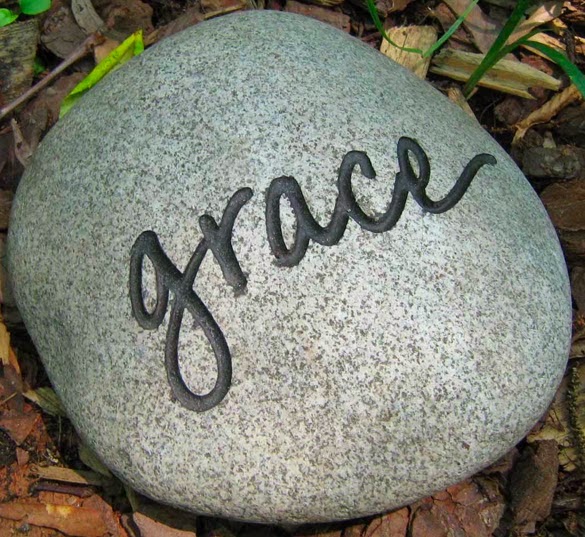
5. How can I give grace today?
It is in the covenant of marriage that I've learned a new depth of grace. I have hurt her. She has hurt me. We have had ample opportunity to practice forgiveness. Grace means we don't hold grudges, we don't bring up past hurts, we move forward having learned about ourselves and each other. Finding ways to give grace - undeserved, unearned blessing and favor - is what brings depth to a marriage. The grace we experience from Jesus becomes the grace we pass on to our mate.

How will you grow your marriage?


Friday, February 7, 2014

Stepping Forward on Failure

Due to the generous critique of others in my life I've become more than I could have been and I still have such a long way to go. I've failed many times but the times I used failure as a stepping stone led to the greatest growth in my life.

I've been privileged in my relatively short lifetime to enjoy experiences I could not have dreamed up on my own. My travels have taken me to awesome places made better by the people I met both there and along the way.

With my hobby of volunteering with USA Swimming as an official, I've met some awesome people - officials, swimmers and coaches. One memory seared into my mind was the near jog while walking the stroke position in Indianapolis, watching as Michael Phelps set the then world record in the 100 fly.....the whole time thinking two things: 1) don't trip, don't trip and 2) Michael, don't do anything illegal! Please don't do anything illegal!

I'm still not sure exactly how I've gotten to work at so many great meets but I know I had to work hard to cooperate with the plans of those who saw in me what I didn't at the time. It all happened because I stepped forward on failure.

I clearly remember my first starting session (as a starter). Standing on deck at Bowling Green University where you can't hide from anyone, surrounded my parents and other spectators.
My friends: Joni Biesel & Julie Allen

A heat of 9-10 boys was whistled up on the blocks. The referee extended his hand and I hit the start button without saying, "Take Your Mark!" It was chaos. Some boys fell in the pool. Some looked over at me with a face that said: “What was that?” Some dove in. Some looked in the stands for mom! And I'm sure a few moms glared at me for ruining their photo op!

The Referee whistled them back up and the start was spot on. Not an auspicious beginning. But I learned that there's no starter jail for failing. You don't get put away for a mistake. But I can put myself away if I quit trying.

I've made plenty more mistakes since then. One time I didn't listen to my mentor and shifted my "usual" position on deck, which led to some not so great starts. There are times to experiment and times to stick with what already works.

After each "failure" I could have stopped, not gotten back behind the mic. I'd failed, made a mistake. But it's not the mistake that matters. It's what happens with the next start. What does the mistake do to me? What does a mistake do to you?

One of my 50th birthday lessons was:

Every start has a lesson. Learn the lesson. Forget the start.

Trials and tribulations are transportation for where you are going.

Everyone fails. I can tell you a hundred ways not to do things. But I can also tell you 1 way to do each of them right. My list of failures and mistakes is far longer than my list of successes and triumphs. I've learned more from my failures, from my mistakes, than I ever did from my successes. I really wish that wasn't the way life worked but it is.

One of the ways that I decided to grow my own leadership skills was through training to be a certified executive coach. Coaching helps clients grow in their leadership capacity. Getting through weaknesses is the approach of this training.

Strengths will only get us so far in our impact on business. To level up we have to take care of some weaknesses. Here's what that training taught me:

The unexamined life is not worth living.

I meet with a group of 5 men, regularly interacting with them as individuals and several times a year as a group. We keep each other from sloppy living. Without them I might think I'm better than I am.

As I began to officiate Senior Nationals, Junior Nationals and Grand Prix meets I was impressed with how much the top athletes examined every swim – every turn – every start – every lap. In a corner of every one of those decks you will find USA Swimming staff filming and helping critique events for the National and Junior National team members. They swim, warm down and then watch film.

I stood over the lanes of the elite of the elite at the 2012 Swimming Olympic Trials in Omaha. One morning at Prelims I was stationed in lane 4 at the start end. The first 5 heats in each event were filled with good swimmers – obviously some of the top in the nation. But then came the last 3 heats. There in succession: Clary, Phelps & Lochte; Soni & Hardy;
Grevers & Thoman. I was amazed, noticing a huge difference in technique compared to the first 5 heats. The precision, the smoothness, the continuity was an impressive contrast to the others. The elite respond when their swimming is examined.

God didn't design us to figure out life alone. We're not that smart. We too easily fool ourselves into thinking we're better than we really are. Learn. Watch. Adjust. Ask for advice.

Most couples who end up coming to me to save their marriage waited too long to ask for help. How are you at taking constructive criticism? How are you at asking for help?

It's not a sign of weakness but of self-awareness – of truth and reality. Do you have people in your life who point out sloppiness in your life? I know if I'd listened more and applied more of what my coaches told me  I would have been faster in the water.

A couple of months ago I was preparing to compete for the first time in about 10 years. The University of Cincinnati alumni meet was the next day. So at the end of my practice with the coaches from Countryside Y in Lebanon and another coach who swims with us, I decided I should dive off a block – a block I hadn't been on in 10 years. So I swam a 50 and at the end asked the the others - “Ok, what do I need to do differently tomorrow?” 

Brad and Kevin, two elite coaches in our area, both said: “Turnover. Turnover has to be faster.”

I replied: “Have you seen my kids swim? It's genetic.”

By the way, I won my age group but not my heat. In my heat was 2010 NCAA D1 50 free champ, Josh Schneider. He was finishing his 100 while I was in the third turn! (I'm the guy on the right just in case you have trouble!)

Examine your life. Listen to critics and supporters alike. Learn whatever you can from your mistakes and failures and move on to the next thing. The only failure that is an end is the one after which you don't get back up and try again. Fail forward.

I have a compass on my desk. My family believes it is there because I need one to follow directions. We did usually took the circuitous route on most vacations! But I digress.

Leaning against the compass is a calligraphied card:


The compass matters more than the calendar.
It's the direction you're going that matters more
then the speed with which you are getting there.

It's not how quickly you get to the goal, it's making sure you're headed toward the right goal. Delays are going to occur. Detours are bound to happen. Examine the life of Joseph from the Bible and you see detour and delay but a life consistently pointed in the same direction with integrity and a desire for excellence which God honored.

A few years ago, Ryan Lochte came to talk to the officials at Senior Nationals @ Ohio State. He told us of a serious injury to his knee while either break-dancing or skate boarding. It kept him out of the water for a number of months. It was during that time, he said, that he stopped drinking pop, got rid of junk food and candy and began doing whatever he could without being in the water, the thing that would benefit his performance.

If we believe our talents are inborn and fixed, then we'll avoid failure at all costs because failure is proof of our limitation. If our mindset is to grow, then we'll step on failure and get a leg up.

The Disciple of Jesus named Peter is my favorite because he was bold, made bold mistakes and failed miserably but still he was counted in Jesus' inner circle.


There was a time when the disciples were in a boat and Jesus came walking on the water. Peter asked, boldly and probably a bit arrogantly, to come walking on the water too. With his eyes on Jesus, Peter stepped out of the boat and walked toward the Lord. But then, the Scripture says, Peter looked at the wind and waves around him and began to sink. Peter cried out to Jesus and Jesus saved him, reaching down and pulling him to safety.

Failure? Perhaps.

Because Peter puts himself in a position to fail, he also puts himself in a position to grow. Failure is indispensable. Failure does not shape you; the way you respond to failure shapes you. After all, if you want to walk on water, you've got to get out of the boat. Set high goals. Strive for what is just out of reach. Dream the impossible. Then do something every day to achieve it. Check your compass more than your calendar.


Thursday, February 6, 2014

How to Pray Constantly

One of my 50th birthday axioms is "pray constantly." But how? Is it really possible? I think it is.

The starting point is to define prayer. In my early days of following Jesus I defined prayer as a specific time, place and posture. Since then I've been through more prayer experiments than I can count.  It was in Seminary that a professor who became a friend transformed my definition. Dr. Steve Harper, in a discussion in his office. In answer to my question about how long one should pray he replied: "Prayer until you meet God."


Up until then prayer had been more about me. Then I started making it about God. When I meet God doesn't necessarily mean I stop praying at that point. It does mean that the connection with God at a deeper level has happened.

Prayer, then, became not about getting an answer,
but about meeting God.

Prayer became, not a way to get what I thought I needed,
but about meeting God who fulfills all my needs.

Prayer became less about a laundry list and more about hearing
from the heart of God to know then what to pray.

This all transformed my life into a life of prayer instead of only moments of prayer. The moments are still important, concentrated, intentional prayer. But the consistent relationship created by constant prayer has increased the transformation of my heart - a transformation I so desperately need. The communion created by constant prayer nourishes an atmosphere of grace and courage to follow God's purpose for my life.

I must confess that it's not been a smooth road, which shouldn't be a surprise. There are more times than I can count when I go through life without that constant prayer. Thankfully, they're less than they used to be, which is an indication that God's working on me still!

In constant prayer God becomes the constant companion. Before this journey began I would often forget God inbetween those moments of prayer. Now His presence guides decisions and guards my heart from moment to moment. Frankly, I've found it easier to make decisions more quickly because life is a more constant prayer.

When prayer becomes less about moments and more about meeting then every conversation becomes a prayer. When I have a conversation with others, treating it like a prayer brings it into the sacred realm. It also guards my tongue! For me it's the practical application of Matthew 18:20…

For where two or three gather in my name,
there I am with them.

This journey started with my conversation at Asbury Seminary. I think a prayer experiment years later took it to a new place. I set a goal of spending an hour in silence with God. Over the course of 30 days I increased the time each day, because the first day and 5 minutes were some of the loudest silence I've ever heard! I can't really describe what it did to my heart but as I look back, it seems the experiment grew my experience of constancy.

I still need dedicated times of prayer but praying constantly means prayer becomes a lifestyle and not just a moment of spiritual achievement, a box to check off. It has taken me more out of my self-centered world and into a God-centered lifestyle. Always? No. Easy? Definitely not. Growing? Yes.


Sunday, February 2, 2014

How to Forgive

Forgiveness is THE key to relationships. The ability to forgive, to not carry a grudge, to not allow bitterness and anger to take root in our lives, this makes the greatest difference in our relationships.

But how?
When you are betrayed, how do you forgive?

When you are hurt by other's choices, how do you let go?

When you get kicked in the gut, perhaps sucker punched,
what do you do with that?

My natural human reaction is to get mad and then get even! There's something that feels good about holding onto a grudge, rehearsing and nursing the painful event. And then I find others who will rally to my point, confirming my suspicion that I was wronged.

Then the reality of the situation sinks in. When I don't forgive….
  • I don't move forward. I'm stuck in a time warp to that moment.
  • I make decisions based on what was done to me rather than what is best for me
  • I don't sleep as well
  • my stress level goes up
  • I have conversations with the perpetrators rather than praying for them
There's a part of each of us that believes if we forgive then we lose something, we give up something. It might feel like letting the other get away with it. If we forgive, will justice be done? If we let them of the hook, will they learn their lesson?

Most of what I've learned about offering forgiveness can be seen in Joseph's story from Genesis 37-50, culminating in what a Seminary professor said was God's "50/20 vision:"
You intended to harm me, but God intended it for good to accomplish what is now being done, the saving of many lives.
1. Truth. Forgiveness only happens in an atmosphere of truth. When we forgive it's not in these ways:
  • It's no big deal. Don't worry about it.
  • Nevermind, it's already forgotten. 
  • I know you didn't mean it. Excusing behavior isn't forgiveness.
Deep forgiveness happens when we say: "What you did hurt me." Sweeping things under the rug only creates a pile to trip over at a later date.

2. "But God." The only way I know to transcend the emotional pit of unforgiveness is to fly higher and get the bigger picture - God's picture. "But God" is the strongest, most life-transforming phrase in the Bible. 

Having experienced a sucker punch, a betrayal, and walking beside those experiencing the same, my counsel has been to not wish harm to "the others" but to leave it to God. It's a form of the Gamaliel stance from Acts 5. God might work in this thing. If I get God's perspective then I can seek the benefit of His Kingdom. The other's motivation doesn't matter.


Looking at the people God used gives me pause. There was Jacob the scheming deceiver.  Abraham was a liar and had an impatient character. David is referenced as the greatest King in Israel but carries the baggage of adultery and murder. Peter is viewed as a strong pillar in the new church but his pride nearly took him down. God used those people and they look a lot like me!

Where I struggle is not just "wishing no harm" but actually loving as Jesus calls me to: "Love your enemies and pray for those who persecute you." I'm still learning to work that out.

3. A Choice. Forgiveness is a decision not an emotion. I have learned over the years to offer forgiveness immediately, realizing that the sting will last longer. Forgiveness is a moment in time choice that has nothing to do with the painful flood of emotion that I feel. I can choose to forgive immediately, then work my way through the maze of emotion.

Forgiveness is a decision between me and my heart.

4. The Cross. Remembering the sacrifice of Jesus is the clincher for forgiveness. His forgiveness of me makes every other action against me pale in comparison.

Garden of Gethsemane, Jerusalem
The words of Jesus ring in my heart with each hurt: "forgive us our sins as we forgive those who have sinned against us." Just that one little preposition to which I'd like to add another "s" in reference to "the others." In that passage known as The Lord's Prayer, we often miss the verses which follow:
For if you forgive other people when they sin against you, your Heavenly Father will also forgive you. But if you do not forgive others their sins, your Father will not forgive your sins. (vv 14-15)
These are difficult words. If I don't pass on the forgiveness I've received, that forgiveness is replaced by a different relationship. I don't think this is referring to my salvation. It is dealing with my experience of God's forgiveness and its effect on my relationships in life. Unforgiveness will sour in my soul and poison everything and everyone around me. It does put me in grave danger of losing that gift of salvation.

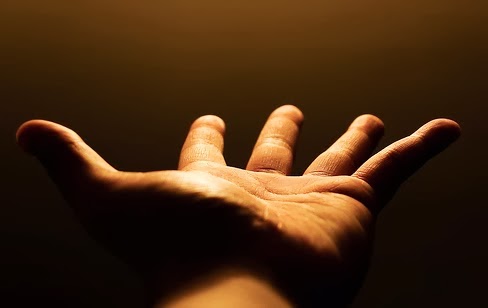
Who do you need to forgive? What wrong has been done to you? What neglect, betrayal or indifference have you experienced? Let it go or it will rule and ruin you. A closed fist can't receive God's grace. An open hand is not only ready to receive but also to pass it on to others. What position will you take?


Wednesday, January 29, 2014

Lessons from a Ditch Digger

We had a mostly good Spring and Summer in 2013.

Packing and moving had its good and bad points. Whoever says they like to pack up a house is demented! We got rid of a lot of stuff, reminding us that while we advocate living more simply, we have a long way to go to live more simply so others might simply live.

Getting the privilege of purchasing a house rather than living in a church parsonage has been awesome - mostly. We've always put sweat equity into each house, part of our ministry back.

We moved at the end of June, had two great Sundays @ The Park, two weeks later I left for Russia and the World University Games (see post FISU). I returned from my "hobby job" to the "real job" but soon encountered a "new job." There were no Trustees to call, but there were good friends.

At 3 p.m. on that Tuesday, after receiving 2 inches of rain in an hour, we found water seeping into our walk-out basement. Just seeping, not flooding, but still quite a nuisance. For a house sitting on a hill, nicely sloped away in front and back, it was baffling, frusting, irritating and completely nauseating! So I began digging, doing whatever I had to to get the water away from the house.

Here's some of what I learned in my unexpected job as a ditch digger.

1. The cause is not usually near the presenting problem. When the flower bed between the stone patio and the house was filled with water for days on end, it's a problem. But that's not where the real problem is. The first order of business was getting the water away from the house, so we dug a 50 foot ditch through clay and rock. Up near the house, after removing 5 stones from the patio (something about the number of stones and conquering that which is bigger than you are seems awfully familiar), we found a crushed drain tile. We opened it up and everything drained. The bottom of the yard was a budding mosquito birthing unit.

Still the water flowed - and flowed - and kept flowing.

Finally after 3 weeks we found the culprit that caused all the issues - a tree root enjoying the spring water flowing through a storm water pipe had grown to 7 feet when stretched out on the ground. That spot was 75 feet from the crushed tile we initially uncovered.

When something infiltrates our lives, the cause is probably a good distance away. In Galatians 6:7 we read:
"Do not be deceived: God cannot be mocked.
A man reaps what he sows."

Here's an adage to live by: we reap WHAT we sow, MORE than we sow and LATER than we sow. Plant corn and you expect corn, not apples. There's a distance from the planting to the harvest. There's a separation between the problem and the cause. It's not always right in front of your face. The presenting issue is not the problem, it's only a symptom. Marriages don't fail in one day. The problems are cumulative. The drain gets clogged with junk, eventually poisoning the relationship.

Lately we've watched Justin Bieber & Miley Cyrus implode. It didn't happen overnight and what we're witnessing is the result of something else.

There are times when I don't believe a problem can be blamed on the principle of reaping and sowing. Someone else's sin can cause pain in our lives. Another's determination to identify you as poison isn't a "reaping and sowing" moment. It's probably more of a "I deserve what I tolerate" axiom.

2. Watch out! There are very few honest people in the world. I had no less than 5 companies come give me their opinion and estimates on dealing with this problem. No one dug. No one wondered. They just wanted to dig. Estimates ranged from $4500 to $11,000 for anything from a sump pump, 2 sump pumps to tiling the entire house again (we already have tile inside and out). One guy said to the

eventual "honest guy" - "you could have made some money on that job." Instead, the "honest guy," Don, wants to make a living but not at the expense of people. I'll never use another plumber as long as he's in business. $535 and the problem has been solved. I've already recommended him to 2 others.

My last day at my previous job, no less than 12 people said to me: "Thank you. We always got openness and honesty from you." Had it been said in a group, I would have been suspect but these were individuals. It was one of the best days of my life. Be honest. Be transparent. Tell the truth. The truth always comes out so you might as well start with it. Could it be difficult? Certainly. Might there be consequences? Yes. But the consequences of lying or shading the truth are much more painful.

Honest people are hard to find. My character flaw - ok, one of them - is that I trust people. I believe they actually are telling me the truth. This "new job" was yet another wake up call.

3. Patience wins the day. The first three days of my "new job" were less than pleasant. I was a bit jet-lagged to be sure, but more than that I was thinking about the implications of water in the basement, even a little water. While I immediately called water experts, I wasn't satisfied they had the answer - besides, I didn't have the money! I called friends - landscapers, talked with neighbors, a computer salesman (hey, I'd go to anyone!). I fretted like I've never fretted before but I knew we hadn't found the issue yet.
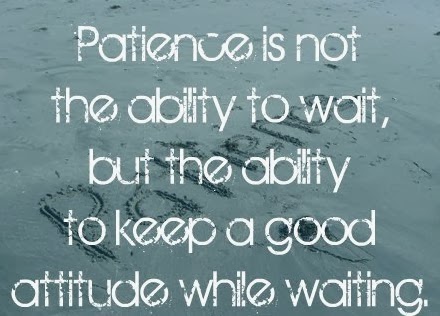
I tend to jump into a problem and just start doing something. That was not the way to deal with this issue, as my lovely wife gently encouraged me. I knew the water needed to get away from the house, but after that, I just wasn't sure.

"Bear in mind that our Lord's patience means salvation."

When we are patient we are imitating God. My fretting did nothing except stress out my family and cause me some heart-burn! Patience is the highway of salvation - God's patience with us. The best solutions come at the end of our patience.

So if a problem surfaces in your life, look around, but not right around. Look far around. The cause is likely not right next to where you are now. Then start digging and learning!


Saturday, January 25, 2014

Keeping Relationships Healthy

People. The greatest influence on us, the greatest contributor to our success and the greatest stressor we can know. People.

Some people start their own business because they're tired of office conflicts, but they still have to relate to people. Some people get out of marriages because of the ongoing conflict. We can't get away from relationships. Is there a way to keep them healthy?

In my reflection on recently reaching the half-century mark, I wrote this principle about growing healthy relationships:
Give the benefit of the doubt

As a USA Swimming official our mantra at a meet is "the swimmers always gets the benefit of the doubt." Our training is that if we have to think about what we saw, if we don't raise a hand immediately, if we aren't completely certain about what we saw, then we can't make the disqualification recommendation. If I raise my hand but then think about it and wonder, it's better to put my hand down than go forward.

Here's how it works in relationships.

The first and most important key to healthy relationships is to look first at myself. Is there something going on in my life, inside of me, that is acting as a filter to possibly misinterpret words or actions?

We're driving to a dinner date and my wife innocently and gently says: "You turn here but remember to get in the left lane." A few moments later, "It's probably better to turn here than go up another block." As we get closer to the restaurant my blood is getting warmer. "Make sure to park around that way." OK, I've about had it. Does she think I don't know what I'm doing? Would she like to drive or does she enjoy driving from the passenger seat? Is she suggesting I don't know where I'm going, that I don't take her out often enough?

All these thoughts and more can easily begin to take over and I'm no longer in a good mood.

I've learned to ask a different question - even if it's later and not in the heat of the moment:

What is so sensitive in me that it hurts when
those words push on it?

So often we like to say: "Why does she do that to me?" That will only lead to isolation, dividing us whereas looking inward will bring healing and draw us together.  

It's easy on a pool deck to give the benefit of the doubt. It's not emotional. It's either right or wrong. If I'm not sure, I don't recommend a disqualification. In relationships there is so much emotion.

To temper my temper - or emotions - it is helpful to recite 1 Corinthians 13:4-7 with a twist. Instead of "love is patient and kind….." I say: "This action - these words - are patient and kind?" Are they? Am I? In the heat of the moment, it's not easy, but through practice I've learned to ask forgiveness, ask for help interpreting my emotion and mature in a way that adds value to relationships.

Thursday, January 23, 2014

Making a Marriage Better

Doing some reflecting as my 50th approached, I identified multiple truths - 50 of them to be exact - I've learned and sought to apply in my life. One of the most important is this:

The love and commitment of a good woman is worth more
than anything I could ever possess.

I've lived for 50 years and been married more than half of it (27 years in 2014). One time Stephanie and I were talking with another couple and they asked: "How long have you been married?" I responded, "20 wonderful years." A look of confusion came across Stephanie's face. "It's been 22 years, dear." "Yes," I said, "but 20 wonderful ones!" Suddenly the backside of a hand whacked me across the stomach. We laughed….and I've never said it again!

Not every year of marriage is as good as the others. It doesn't mean I'd trade any of them, for the diffiult years make the marriage what it becomes in the future.

I've read plenty of books on marriage - attended multiple marriage conferences - counseled couples in trouble - celebrated weddings with couples - and learned only that I have so much still to learn. One thing I do know is that our commitment to our marriage is the most important commitment (besides our one to Jesus) that we could make and keep.

A good marriage can be used by God to shape us. It's one of His best tools for growing the fruit of the Spirit in us. Afterall, what marriage is good without love, joy, peace, patience, kindness, goodness, faithfulness, gentleness and self-control? (Galatians 5:22-23)

If I understand Ephesians 5 correctly, marriage is one of God's greatest tools to demonstrate to the world the depth and breadth and patience of His love for us. So making a marriage better matters a lot.

I think our marriage is good. It's not perfect but it is good. There is however one thing we have done that has had a great impact our marriage. Arguably it's the greatest return on investment in this essential relationship.

We've spent time and money on our marriage. 


Marriage Focused Time - Life will help you avoid the important discussions and connections that make a marriage good. We chose to make time to attend conferences like Family Life and Marriage Encounter. In 2012 I took a 3 month sabbatical and one trip was a marriage weekend with the Navigators at Glen Eyrie. When we were young and had little money, we rented DVD's (ok, they were actually VHS tapes) and watched some marriage teachings at home, using them as discussion starters.
Glen Eyrie Weekend Getaway

The time and money we spent on those conferences were well worth it. They forced us to talk about important things that life was helping us forget. We've never regretted investing the time and spending the dollars to grow our marriage.

The time is intentional, focused on the relationships, allowing others to challenge us through their teaching and example and questions. One time we went to a Christian Counselor for a "tune-up." There was nothing wrong that we could identify but we knew the relationship could be better. It took someone from the outside to help us see inside.

Whether it's a walk in the park, a lunch date (because lunches are cheaper than dinners) or a trip to the grocery, time away from the kids is essential.

Galcier Bay, Alaska - 25th Anniversary Cruise
Vacations - So many in the U.S. don't take all their available vacation days. We make sure we take as many as possible. One goal we've had is every 5th anniversary is a "big" trip, usually a cruise. What about the kids, you ask? We leave them for those days, and other days. The priority of our marriage is one of the greatest gifts we've given to our children. When they were young and we had a date night, they sought to manipulate us with crying and complaining. Checking with the babysitter later, they were fine after 3 minutes.

Taking time away for the two of us was vital to prepare for the season of life we've just entered - the empty nest. We love it. We miss our kids but we love it being just us again. The important thing is that we still like each other! A big part of that is we took the time and spent the money to create memories together.

It goes without saying that we also took some really fun family vacations too! We traveled with a pop-up camper, and fixed much of our own food to make them affordable.

Individual Hobbies - While we love each other, our relationship together doesn't cancel out our individual strengths and passions. Stephanie loves to quilt and is energized by that time. She needs that outlet for her God-given creativity. I, on the other hand, am competitive to the core so she supports my time at the Y as well as officiating for USA Swimming around the country.

We've tried to make sure we're not gone more than a couple of nights each week, but give room and support for those longer trips be they to North Carolina and a folk art school (guess who did that one) or a swim meet in Russia.

Peter I Summer Garden - St. Petersburg, Russia
Marriage is like a garden. It will produce beautiful flowers but only with intention and attention. Without it, weeds will grow and a few individual splashes of color may occur, but there will be no bigger picture creating a pattern that can inspire the world.